The conversation has shifted from cost to value.
I was listening to The New York Times’ The Daily recently as they discussed the ripple effects of changes to federal student loans. While the conversation centered on financial aid, I found myself thinking about something much bigger. The episode wasn’t really about loans—it was about value. It reinforced a question that every college and university should be asking:
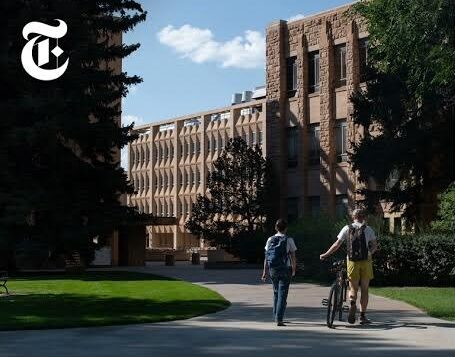
“In a rapidly changing world, how do we continue to demonstrate that what we offer is worth the investment?”
The New York Times’ The Daily
When the value of college is under scrutiny, your brand matters more than ever.
For decades, higher education operated under a relatively stable assumption: build a strong academic institution, establish a solid reputation, and students would come. Today, that assumption is being challenged from every direction. Tuition continues to rise. Families are scrutinizing return on investment more than ever before. Employers are redefining workforce needs around artificial intelligence, automation, and emerging technologies. Federal student loan changes are creating new financial pressures for students pursuing undergraduate and graduate degrees. At the same time, many colleges are preparing for the demographic enrollment cliff, creating greater competition for a shrinking pool of traditional college-aged students. None of these challenges exist in isolation. Together, they represent a fundamental shift in how students and families evaluate higher education. For colleges and universities, this isn’t simply an enrollment challenge. It’s a relevance challenge. And ultimately, it’s a brand challenge.
When we talk about brand, we’re not talking about a logo, a tagline, or a new website. We’re talking about the value your institution represents in the minds of prospective students and their families. Your brand is the promise you make, the experience you deliver, and the confidence people have that choosing your institution is the right investment for their future. Too often, institutions respond to enrollment pressure with tactical marketing. They launch another campaign.
They redesign the website, increase digital advertising, and produce another viewbook. Those efforts absolutely matter. At TWIST, they’re part of what we do every day. But before any of those tactics are put into motion, there are much bigger questions that need to be answered.
1. Is the investment worth it and what are families really asking?
When families ask, “Why should I invest $200,000 in this education?” they’re rarely asking about tuition alone. They’re asking whether the investment will be worth it. Will this education prepare my child for careers that may not even exist today? Will graduates leave with the skills employers are actually looking for? Can they develop the adaptability needed to navigate a workforce that continues to evolve at an unprecedented pace? And will this institution provide not only knowledge but also opportunity?
They’re looking for confidence. Confidence that the institution understands where the workforce is headed and that graduates will leave with more than a diploma. Confidence that the education they’re investing in today will still have value ten years from now—not just on graduation day.
“We cannot do it by standing still. The challenges before us demand creativity, partnership, and shared leadership.”
— Dr. Lori Stewart Gonzalez, President (Ohio University)
This is where branding and marketing are often confused. Marketing communicates your story. Branding defines the story worth telling. Marketing explains what makes your institution different. Branding answers why that difference matters.
One without the other creates a disconnect. An institution can produce beautiful marketing, launch a compelling campaign, and redesign every touchpoint. But if it hasn’t clearly defined its purpose, its promise, and its relevance in today’s marketplace, no amount of marketing will solve that problem. Branding is not simply an exercise in communications. It’s an exercise in institutional alignment.
2. Is our institution staying relevant?
Many colleges hear the word “rebrand” and immediately think about updating their logo or refreshing their visual identity. Those things certainly have value, but they’re only the visible expression of something much deeper.
The strongest institutions are asking far more significant questions.
- Are our academic programs aligned with tomorrow’s workforce?
- Are we telling a story that’s truly differentiated, or does it sound like every other institution?
- Does the student experience reflect the promises we’re making?
- Are we communicating outcomes that families genuinely care about?
- Are we preparing students for their first job—or for a lifetime of learning?
Sometimes those conversations lead to stronger messaging and a more focused brand strategy. Sometimes they transform the admissions experience. Other times, they spark deeper institutional conversations about curriculum, interdisciplinary learning, employer partnerships, internships, experiential education, or entirely new academic programs designed around the future of work. Those decisions eventually influence a school’s brand. But they begin with institutional strategy—not tactics. They’re built through the decisions institutions make every day.
3. Will our reputation be enough?
For generations, many colleges relied on their history, rankings, or long-standing reputation to attract students. Those things still matter. But they are no longer enough on their own. Today’s students don’t inherit trust. They research it, compare it, and expect evidence.
They’re evaluating colleges the same way they evaluate every other important decision in their lives.
- Does this institution understand who I am?
- Does it reflect my values?
- Will it prepare me for what’s next?
- Can I picture myself here?
- Will I belong here?
Legacy may open the door. But authenticity, demonstrated outcomes, and a compelling story are what inspire students to walk through it.
“Universities can no longer think of education as a one-time transaction. They must prepare students not only for their first career, but for a lifetime of learning and adaptation. That perspective reflects the reality families increasingly expect from higher education today.”
— Julio Frenk, UCLA Chancellor (UCLA Newsroom)
The future belongs to institutions that can adapt.
The colleges that emerge stronger over the next decade won’t necessarily be the oldest, the largest, or even the most well-funded. They’ll be the institutions willing to evolve without losing sight of who they are. Modernizing while honoring their mission, they’ll preserve the traditions that define them while embracing innovation where it matters most. They’ll continually evaluate whether their academic offerings reflect the realities of today’s workforce, strengthen partnerships with employers, rethink how education is delivered, and communicate a compelling value proposition consistently across every touchpoint.The most successful institutions won’t choose between liberal arts and career readiness. They’ll find meaningful ways to connect the two.
We’re already seeing this happen across higher education.
- Small private colleges are integrating career pathways into the liberal arts.
- Large public universities are reimagining lifelong learning.
- Career-focused institutions are shortening the distance between education and employment.
Each is responding differently, but all are responding to the same reality: relevance has become one of higher education’s most valuable assets. In doing so, they’ll build brands that are not only respected for their history but also valued for their relevance. At TWIST, we believe a great brand isn’t designed for today’s enrollment cycle. It’s designed for the next decade. The strongest brands are built when institutional strategy, academic vision, and authentic storytelling all move in the same direction. Because when the marketplace shifts—as it is right now—relevance becomes one of your greatest competitive advantages. The institutions that succeed won’t simply tell better stories. They’ll be the ones that can clearly articulate why they’re worth choosing in the first place. And ultimately, they’ll become better stories.

About the Author
Connie Ozan is Co-Founder & Chief Creative Officer at TWIST Creative. A nationally recognized designer and educator, she’s led more than 200 award-winning brand campaigns for schools, nonprofits, and businesses—blending timeless design with strategic insight to help clients shine.
