In a volatile funding environment, a capital campaign strategy has to do more than finance a project. For nonprofits and schools alike, it has to show donors which institutions are prepared to matter next.
The nonprofit funding crisis is real. So is American generosity.
In 2025, charitable giving in the United States reached a record $617.2 billion, up 3% after inflation. Yet the number of donors declined 3.6%. At the same time, 73% of nonprofit CEOs reported increased demand for services, and roughly 30% said their organizations had reduced staff since January 2025.
More money. Fewer donors. Greater need.
That contradiction defines the moment. Federal funding remains unsettled for many organizations. Museums and cultural institutions are again confronting proposed elimination of the IMLS, NEA and NEH in the federal FY2027 budget, even after Congress preserved those agencies for FY2026. Schools face their own pressures: enrollment uncertainty, tuition sensitivity, growing financial-aid needs, deferred facilities and the rising cost of delivering a differentiated education.
The instinct may be to make a bigger ask, faster. But urgency alone is not a case for support. And a campaign built primarily around a building, a budget gap or a list of institutional needs can sound like an invitation to finance yesterday.
The campaigns that win now will offer donors something more consequential: confidence in what the institution can become, whom it will serve and why its future matters.
A capital campaign is a confidence campaign.
What a confidence campaign looks like
We saw this firsthand with the Cleveland Museum of Natural History. The Museum was preparing for one of the most significant transformations in its 100-year history: a $150 million capital campaign to completely reimagine its exhibits, facilities and visitor experience.
But the challenge was larger than funding a building. The public needed to see the Museum differently, not as a static institution preserved by nostalgia, but as a living laboratory and a vital part of Cleveland’s cultural heartbeat. The campaign had to create belief in the Museum’s future before it could ask people to invest in it.
TWIST began by identifying a new audience, the Suburban Millennial Mom, and exploring how curiosity, family and connection could renew engagement and giving. Save Curiosity became the campaign idea. The Natural became an ongoing content platform. High-touch donor experiences, storytelling, social media and digital campaigns all reinforced a single promise: this is where science and imagination meet.

The result was a narrative and visual shift that turned a capital campaign into a community movement. In the first year, brand awareness increased 40% across Cuyahoga County. Donor engagement increased 25%, accompanied by new high-value gifts during the campaign launch. The Museum’s advancement and development teams fully adopted the campaign materials, and The Natural sustained engagement throughout construction.
That is what confidence looks like. The capital project remains essential, but it is placed inside a larger story about relevance, public value and what the institution makes possible.
A capital campaign is not a bailout
When a grant disappears or an operating model comes under pressure, it is tempting to turn the shortfall itself into the story. The threat is real. It deserves honesty. But donors rarely make transformational gifts simply to close a hole. They invest when leaders can show how the institution will emerge stronger, more relevant and more durable.
Need may open the conversation. Confidence earns the investment.
The case for support has to translate pressure into consequence and agency:
- What must the community not lose?
- What can this institution do that no one else can do in quite the same way?
- What becomes possible if donors act now?
- What will leadership change so the organization is not simply back in the same position five years from now?
For a museum, the story is not the roof. It is the access, education, preservation and civic connection the roof protects. For a school, it is not the science wing. It is the kind of learning, opportunity and future readiness that happens inside it. For a human-service organization, it is not replacing a lost grant. It is building the capacity and resilience to keep meeting needs no matter how the funding landscape changes.
Broaden the meaning of capital
Many leaders still hear “capital campaign” and picture bricks, renderings and naming opportunities. But today’s strongest efforts are increasingly comprehensive. They may combine facilities with endowment, current-use funding, scholarships, staff capacity, program innovation, digital infrastructure, audience development and reserves.
Capital is not only what an organization builds. It is what makes the mission more durable.
Schools are already moving in this direction. In one 2026 survey of primary and secondary schools running campaigns, 48% of campaign funds supported current operating needs, compared with 20% for capital projects and 15% for endowment. That does not mean the building no longer matters. It means the building has to sit inside a larger, more credible plan for institutional strength.
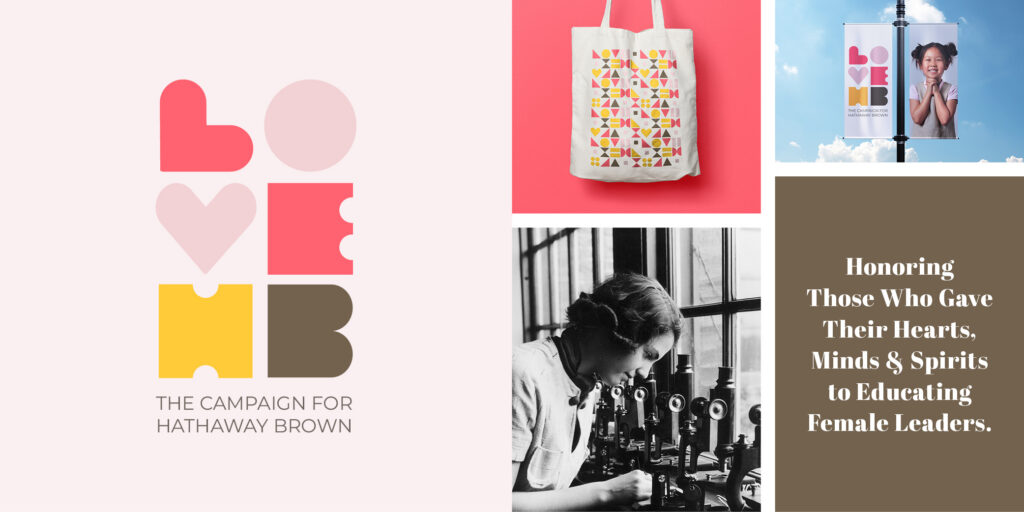
Five requirements of a strong capital campaign strategy
- Begin with a strategic truth, not a campaign theme
A slogan can organize communications. It cannot substitute for a decision about the future. Before naming the campaign, leaders need a sharp answer to three questions: Why us? Why now? Why will this investment make a meaningful difference?
Save Curiosity worked because it expressed a larger strategic truth about what the Museum protects and awakens. If the answers to Why us? Why now? and Why this investment? vary by board member, fundraiser or department, the campaign is not ready for creative development. It is ready for alignment. - Make the future more vivid than the need
Donors need to see the change their gift will create. Replace institutional abstractions with visible human and community outcomes. Show what a student will be able to do, what a family will be able to access, what an artist or scholar will be able to preserve, or what a neighborhood will still have because the institution was prepared to lead.
For the Cleveland Museum of Natural History, renovated exhibits and facilities were evidence of transformation. Renewed curiosity, stronger family connection and a living laboratory for future generations were the story. The project is evidence. The future is the story. - Demonstrate confidence before asking for it
Campaign communications cannot compensate for an uncertain board, a fragmented leadership team or priorities that have not been tested with donors. Internal alignment, feasibility conversations and early leadership gifts are part of the story because they prove that the people closest to the institution believe in the plan.
At the Cleveland Museum of Natural History, 100% adoption of the campaign materials by the advancement and development teams mattered. It meant donors encountered a consistent case for the future across conversations, presentations and communications. Confidence has to begin inside the institution before it can spread beyond it. - Build a communication system, not a campaign brochure
A case statement is necessary, but it is only one part of the donor experience. Major donors, alumni, families, members, foundations, corporate partners and the broader community enter the story from different places. They need a consistent central idea supported by different proof, language and pathways to participation.
That requires a connected system: campaign narrative, case for support, message architecture, leadership talking points, donor presentations, digital content, video, email, events, progress reporting and stewardship. The Natural played that role for the Museum by giving people an ongoing reason to engage throughout construction. If the story changes every time the format changes, confidence erodes. - Use the public phase to build the next donor base
Independent schools raised $5.87 billion in 2025, yet donor participation continued to decline. Among CASE member schools, gifts of $25,000 or more accounted for 78.3% of funds received but came from just 2.9% of donors. Across the broader nonprofit sector, total giving is also rising while donor counts fall.
Leadership gifts will always drive campaign totals. But a public phase that only celebrates the largest donors misses a strategic opportunity. The Museum deliberately expanded the audience beyond legacy supporters, creating new relevance for younger families who could become visitors, advocates and donors. Schools and other nonprofits can do the same by inviting younger alumni, first-time givers, members, volunteers and community partners into a shared future. The campaign goal is not merely to finish the pyramid. It is to widen the base of belief.
The campaign starts before the campaign
Before a public launch, leadership should be able to say yes to the following:
- The board agrees on one compelling future and is prepared to participate.
- Top priorities have been tested with the people most likely to lead the campaign.
- The funding model protects annual giving while balancing immediate needs and long-term resilience.
- Each priority is tied to outcomes donors can understand and leadership can measure.
- The case for support sounds like the institution and stands apart from competing appeals.
- Campaign communications are planned for the quiet phase, public phase and the years of stewardship that follow.
- Staff and board members know their roles, their language and the next action they want each audience to take.
If several of those answers are no, pushing the launch date is not failure. It is stewardship. A campaign exposes every unresolved question about strategy, leadership, audience and institutional identity. Solving those questions early is far less expensive than trying to solve them in public.
Raise more than money
The best campaign leaves an institution with more than a funded project. It produces a stronger donor pipeline, clearer messages, greater board confidence, better stories, deeper community visibility and a more durable culture of philanthropy.
A campaign that reaches its financial goal but exhausts the team, weakens annual giving or narrows the donor base has solved only part of the problem.
Before you ask people to fund the future, make that future unmistakable.
Build belief before the ask.
TWIST builds the case, messaging and campaign communications that turn ambition into donor confidence. Start your plan.

About the Author
Michael E. Ozan, Co-Founder & CEO at TWIST Creative, is a strategist and brand builder trusted by purpose-driven CEOs and boards. For over 25 years he’s delivered market guidance and campaigns that align teams, sharpen spend, and produce measurable, defensible outcomes.
