Open house season gives schools a rare opportunity: families can experience the people, teaching and culture they have been reading about. A child can meet a future friend. A parent can watch a teacher respond to a question. Suddenly, the school begins to feel like a possibility. That moment is what school open house marketing should be built to create.
However, the work starts well before those families arrive. Every invitation, program choice and follow-up needs to help families decide whether this is a place where their child can thrive. Attendance matters. Still, its value becomes clearer when we know who came, what they needed and whether the visit helped them take the next step.
At TWIST, we recommend building open house season around three things: a focused enrollment goal, a community willing to make personal introductions and an experience that makes the school’s promise tangible.

Begin school open house marketing with the families you can serve
First, identify the grades with available seats and the enrollment year you are recruiting for. Then consider the educational needs your school serves particularly well. For example, a family exploring kindergarten has different questions from a seventh grader considering a transfer. Likewise, a parent comparing high school options needs something different again.
Next, ask what families hope will change for their child. NAIS’s research on school choice examines the progress parents seek when choosing an independent school. A 2025 NAIS article also shows how one school uses those motivations to tailor admissions conversations. Examples include access to college counseling or learning support.[1]
Use that thinking to shape your invitation. For instance, a middle school event might address making friends, finding appropriate challenge and becoming more independent. A high school visit, on the other hand, might emphasize relationships with teachers, opportunities to participate and preparation for what comes next.
Define a promising prospect through educational fit, entry timing and practical access. Explain financial assistance and transportation early so families can assess what is possible. After all, a household’s ZIP code or familiarity with private education tells you little about how well its child might thrive at your school.
Give your community a role in school open house marketing
Start with people who know the school: current and former parents, alumni, grandparents, faculty and trustees. Then ask a few useful questions. What would they want another family to experience? Who comes to mind? What might keep that family from considering the school?
Next, give willing advocates a short email or text they can personalize, an event link and the option to welcome their guests on arrival. Ask them to forward the invitation or make an introduction with the family’s permission. A personal invitation can make the first visit feel more comfortable, which is why it belongs at the center of your school open house marketing.
At the same time, keep outreach open to new communities. Build relationships with relevant preschools, youth organizations and community groups. Also use focused advertising to reach families beyond existing networks. Finally, treat the efficiency of referrals as a hypothesis to measure against other sources in your own enrollment process.
Choose speakers who make the school relevant
Families often remember the speakers most, so choose them as carefully as any other part of school open house marketing. Our first choice is often an alum in conversation with a current student or teacher. In 15 minutes, they can connect a specific school experience to a meaningful outcome. That might be finding a voice, discovering a talent or learning to persist through a difficult subject.
Similarly, a recent graduate can discuss the transition to college. A parent can explain what changed after transferring. Meanwhile, a teacher can describe how students receive both challenge and support. Choose people who can tell specific, relatable stories, and leave room for unscripted questions.
An outside speaker can also give families a reason to attend when the topic connects directly to your school. Consider a child development specialist discussing the move to kindergarten. You could also invite an educator exploring adolescent independence or an author whose work relates to your teaching philosophy. Then pair the talk with a classroom experience that shows how the school approaches that subject.
Before paying for a speaker, ask whether the likely audience includes families considering your grades and educational approach. If that audience has little connection to the enrollment goal, keep a broader community lecture as a separate event.
Independent schools can make their educational approach visible
For nonsectarian independent schools, build the visit around what is distinctive about learning there. Families need to understand how that approach will affect their child’s daily experience. Some independent schools are also faith-based, so those schools can combine these ideas with the guidance in the next section.
Kirby School’s January 2026 open house invitation offered small-group sample classes across humanities, STEM, arts and world languages. It also included teacher conversations and student ambassadors. Altogether, the program gave families several ways to experience the school’s teaching.[2]
Create a short sequence that reflects your own strengths. For example, a discussion-based school can invite visitors into a seminar. A school known for experiential learning can offer a design challenge with students and teachers. Likewise, an early childhood program can let children explore a learning space while parents observe how teachers guide them.
For older students, build in time with current students to ask about friendships, workload, clubs and joining the community. Give parents access to faculty and division leaders as well. Afterward, reunite families so each can discuss what they experienced.
Keep the promise specific. An invitation such as “Experience a middle school where your child can contribute, ask questions and be known” needs a program that demonstrates those things. In short, strong school open house marketing gives families evidence they can use to compare their options.
Faith-based schools can show how belief shapes daily life
Faith-based schools have an additional opportunity to explain how their religious mission shapes education and relationships. Make room for families to see academic quality, spiritual formation and the way people care for one another.
Barna’s 2017 research with ACSI identified safety, caring teachers, academic excellence and character development as important priorities. Those priorities held among both current and prospective Christian school parents. However, spiritual formation carried different weight for the two groups. Although this is older research within a particular Christian school context, it offers a useful reminder to listen to prospective families’ questions.[3]
Consider a brief conversation with a student, teacher and chaplain or other faith leader about how the school’s beliefs influence daily choices. Then follow it with classroom experiences and a student-led service activity connected to an ongoing commitment. Students can explain whom the work serves, what they have learned and why it matters within their tradition.
Pacifica Christian High School combines teacher-led mini-classes with tours and interest-based sessions. In contrast, Holy Cross High School in Connecticut offers an open house followed by Mass and a community Fall Fest. These examples show different ways to connect academics, religious life and hospitality.[4][5]
Explain who is welcome, any faith-related admissions requirements and what students participate in during a normal week. Where families of other faiths or no faith are eligible, describe that experience clearly. In addition, distinguish an optional worship invitation at an event from expectations after enrollment.
For outreach, equip current families and appropriate parish, congregation or other faith-community partners to make personal introductions. Extend invitations to the wider community wherever the school’s mission and admissions policy allow. Throughout your school open house marketing, keep the school’s particular tradition clear.
Make attending easy and the open house experience useful
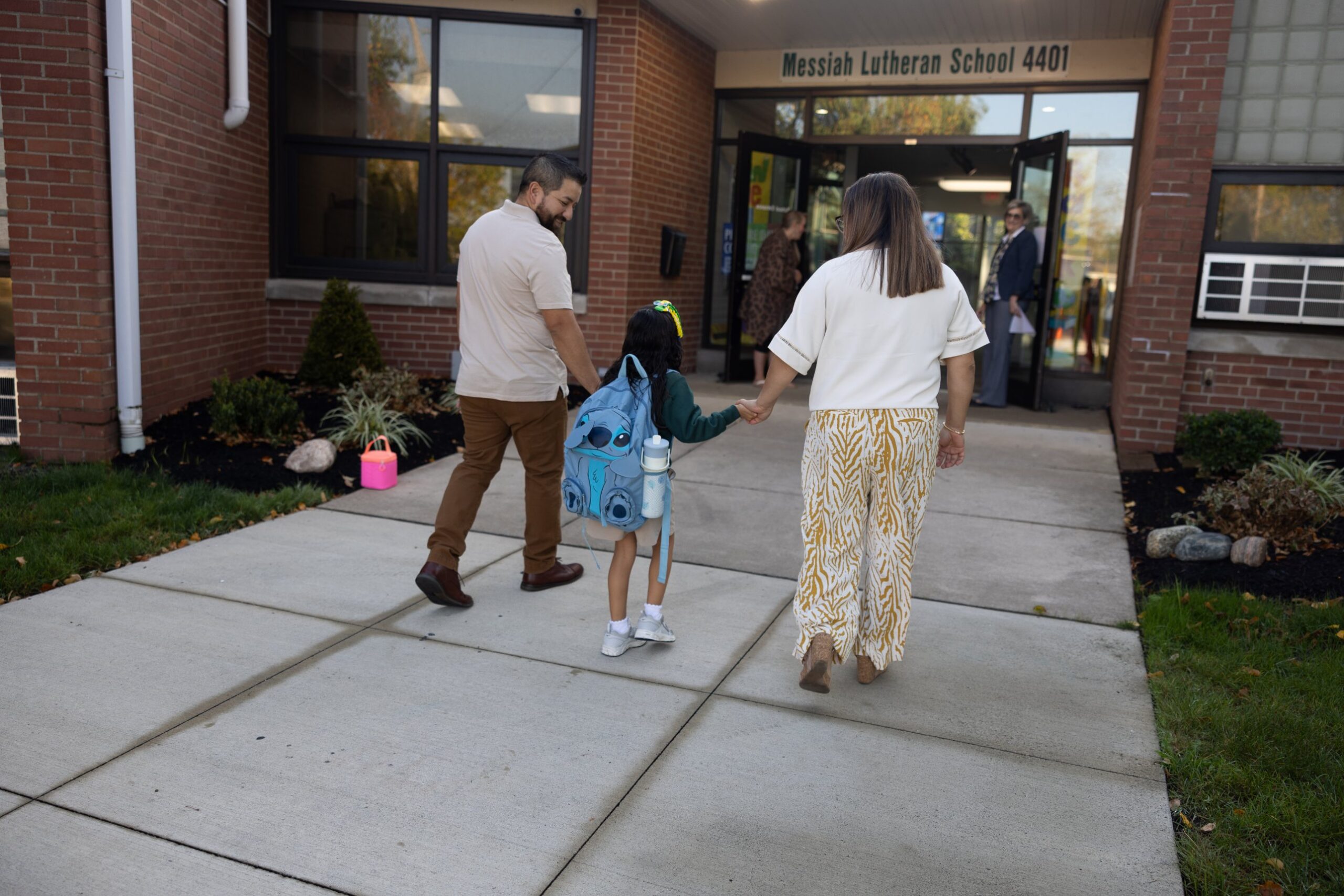
Clear logistics are a quiet but essential part of school open house marketing. Build one event page that explains who the visit is for, what families will do and how long it will take. Include parking, accessibility, whether children attend, any supervised sibling activities and a contact for practical questions. Also offer another visit option for families who cannot make the date.
A short registration form can capture entry grade, intended start year, contact details and how the family heard about the event. Then add one optional question: “What would you most like to learn?” Use the answer to connect each family with someone who can help.
For a 90-minute visit, we suggest the following schedule:
- 10 minutes of welcome
- 15 minutes for a school story or conversation
- 35 minutes of classroom experiences
- 20 minutes of tours and informal questions
- 10 minutes to arrange next steps
Meanwhile, keep affordability, transportation and student-support conversations available privately.
Offer a school-day visit or shadow experience as a follow-up. For example, EMA documented Berwick Academy’s use of visits during regular classes. Prospective students were matched to current students by interests. That 2020 example illustrates how families can get closer to everyday school life.[6]
Measure school open house marketing from invitation to enrollment
Paid promotion can extend school open house marketing beyond your current community when it supports a clear audience and offer. Emphasize the grades you are recruiting, communities within a workable commute and the experience families will have. Then direct every ad and invitation to the relevant event page. Before expanding spending, review registration and attendance by source.
Admissions should follow up within one or two business days with a personal response to each family’s interests. Offer a specific next action, such as a shadow day, tuition conversation or application meeting. Also give families who missed the event an easy way to reschedule.
Track registrations, attending households, applications, offers and enrolled students by source, grade and entry year. Then compare attendance-to-application and application-to-enrollment rates, along with costs. Count marketing, event and staff costs consistently, because a referral program takes resources too. Review early progress after 30, 60 and 90 days. Finally, evaluate enrollment once that admissions cycle closes.
The school examples above offer practical ideas, not comparative proof that one format produces the most enrollments. Instead, your own results can show which invitations and experiences help families make a confident decision. Over time, that evidence will sharpen every part of your school open house marketing.
Above all, give families a visit that helps them imagine an ordinary Tuesday at your school: the teacher who will know their child, the classmates who may become friends and the opportunities they could grow into. Then make it easy to continue the conversation.
Planning your next open house? TWIST helps schools connect their distinctive value to the families they can serve, from the first invitation through the enrollment decision. Let’s talk about your goals for this season.
Sources
Source numbers in the article link to the original pages. Web sources reviewed October 5, 2026.
1. NAIS Finding the Balance of Human Connection and Technology in Admission. May 2025. Application of parent motivations to personalized admissions conversations.
2. Kirby School Open House January 22 2026. Published event program with sample classes, faculty conversations and student ambassadors.
3. Barna Group and ACSI What Parents Look for in Christian Schools. August 22, 2017. Research among current ACSI school parents and parents open to Christian schooling; not a survey of all faith-based schools.
4. Pacifica Christian High School Visit Pacifica. Admissions page with 2026–2027 visit opportunities, mini-classes and parent events.
5. Holy Cross High School Admissions Events. 2026 admissions programming, including an open house, Mass, Fall Fest and student visits.
6. The Enrollment Management Association Open Houses Are Not Just for Fall. January 3, 2020. Historical Berwick Academy example of visits during regular school days.
